

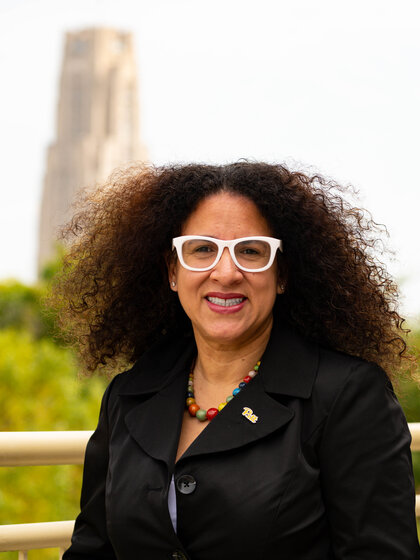
This article, written by four distinguished Latina legal scholars, provides an analysis of the unique challenges, achievements, and potential future for Latina law professors and educators in the United States. It is framed around the 2022 Graciela Olivárez Latinas in the Legal Academy Workshop (GO LILA), which brought together 74 Latina law professors to foster community, mentorship, and strategic growth.
Much has been discussed in higher education about the impending “demographic cliff”. The consensus view is that the United States will hit a peak of around 3.5 million high-school graduates sometime near 2025. As a result, the college-age population is expected to shrink across the next five to 10 years by as much as 15 percent. Furthermore, even as high school graduation rates have increased in recent years, the percentage of graduates who choose to enroll in college right after high school has been declining. Less attention has been given to an additional demographic challenge for law schools: no matter the size, the future pool of law school applicants will differ significantly from the current one, with a much higher proportion of students of color, first-generation college students, and individuals from low-income or lower socioeconomic backgrounds.
Between 2022 and 2023, the Latinx population accounted for close to 71% of the overall growth of the United States population. Between 1990 and 2020, Latinx enrollment in postsecondary programs increased by 372%—from 782,400 to 3.7 million students. It is expected to exceed 4.3 million students by 2026, far surpassing the growth rate of any other racial-ethnic group – by over 10%.1 Today one in every five students enrolled in college is Hispanic.2 Latinas are more likely than Latino men in the same age range to have a college degree.3
According to the Law School Admission Council, law school applicant numbers were up almost 40 percent in the past year. Applications from Latinx students also increased by an approximate 8.5.4 While higher applicant and enrollment numbers are good news for Latinx students the number of legal degrees conferred to Latinx law students remains low at 12.4 percent . Latina women in particular struggle with representation in law school and are underrepresented. Though women outnumbered men for law school enrollment in 2022, roughly 40% of lawyers in the United States are women, and of that percentage less that 2% are Latinas.5 According to the authors, the shortage of Latinx lawyers across the nation mirrors the scarcity of Latinx in legal academia. Latina law professors represent a mere 1.6% of the legal academy, despite decades of initiatives to promote diversity. The authors also highlight that by early 2023, only 4 of the almost 200 deans of ABA-accredited law schools are Latina women. This is consistent with the challenges Latinas face to attain other higher education senior leadership roles.6
Research has demonstrated consistently that enhancing Latinx representation among faculty is essential for boosting college completion rates and showing Latino college students that academic success can pave the way for achievements both within and beyond campus. Studies indicate that diversity among both students and faculty enriches the educational experience for everyone by offering varied perspectives, fostering cultural understanding, and supporting the retention and graduation of students of color.7 Latino and other faculty of color also play a vital role as role models and mentors, helping students of color advance in their academic journeys.
The Graciela Olivárez Latinas in the Legal Academy (“GO LILA”) Workshop is an annual event that, since 2022, has been organized to support and mentor Latinas in the legal academy and also those that aspire to enter it, lead and succeed. The workshop name honors Graciela Olivarez, who was the first Latina law professor in the United States. At the first workshop, they found that nearly half of the 74 workshop participants were the first Latina faculty member at their respective law schools. This also often means they are the only Latina or Latinx person in a tenure-track or tenured position, highlighting the continued isolation and lack of diversity in many law schools. Is this isolation that makes spaces like the GO LILA workshop so important.
As a Latina law professor that has for years participated in efforts to support the diversification of law school faculty, it is somewhat disheartening to see that this drought of Latina law professors has persisted despite efforts over the last few decades to diversify the legal academy. For example, initiatives like Latina and Latino Critical Legal Theory (LatCrit), SALT Junior Faculty Workshop and People of Color Legal Scholarship (POC) have sought to address this disparity, but structural barriers persist. LILAs face discrimination in the form of racism, sexism, and ethnic prejudice. They report experiencing microaggressions, stereotypes, and bias against their scholarship, which is sometimes dismissed or undervalued. The authors also highlight the many scholarly contributions of LILAs and the leadership roles they often assume at their institutions, even though those roles do not necessarily translate into senior leadership roles. Despite their qualifications, LILAs often face barriers to career advancement. Biases can be based on their cultural identity or their institution’s perceived reputation, and their intellectual contributions may be undermined by prejudiced assumptions about their expertise.
The authors are committed to continuing their efforts to expand the representation of LILAs. They highlight the importance of building pipelines for more Latina scholars to enter academia and assume leadership positions. Reflecting on the journey from the first Latina law professor in the U.S. in the early 1970s to the present day, the authors note significant progress, yet they acknowledge the ongoing challenges that remain. We are indebted to them for their collective efforts to showcase the powerful contributions of LILAs while emphasizing the need for continued advocacy, mentorship, and systemic change to ensure their future success and representation in the legal academy. Their growing influence reflects the promise of a more inclusive and diverse legal professi

- Hispanic Assoc. of Colls. and Univs., 2024 Hispanic Higher Education and HSIs Facts.
- UnidosUS, A Look into Latino Trends in Higher Education: Enrollment, Completion, & Student Debt (Aug. 2022).
- Lauren Mora, Hispanic Enrollment Reaches New High at Four-Year Colleges in the U.S., but Affordability Remains an Obstacle, Pew Rsch. Ctr. (Oct. 7, 2022).
- James Leipold, Incoming Class of 2023 is the Most Diverse Ever, but More Work Remains, LSAC (July 18, 2023).
- Jill Lynch Cruz, Still Too Few and Far Between: The Status of Latina Attorneys Fifteen Years Later, 2023 HNBA Annual Convention.
- Lisa Eiden-Dillow & Neil Best, Senior-Level Leadership in Higher Education: The Latina Experience, 6 Am. J. Qualitative Rsch. 93 (2022).
- U.S. Dep’t of Educ.: Off. of Plan., Evaluation, and Pol’y Dev., The State of Racial Diversity in the Educator Workforce (July 2016).



We are grateful to Professor Velez Martinez for engaging with our work and to Jotwell for publishing her review and praise of our Latinas in the Legal Academy: Progress and Promise (2023), published in Harvard Latin American Law Review.